


Best 10 E-commerce Marketplace Tools in 2026 (Compared)

Published
April 06, 2026
Updated
June 11, 2026


Do you sell your goods on your own website as well as on Amazon, eBay, Walmart, or Shopify? Simple tasks like handling orders and keeping track of customer service tickets can become incredibly difficult when selling goods through various channels. The bigger you want to expand and the more channels you add, the easier it becomes to miss incoming messages and overlook orders.
The answer is good marketplace management software, a central platform that keeps track of all of your inventory, customers, and orders, links to your sales channels, and makes sure your data stays up to date everywhere at once.
But how do you know you're using the right ecommerce tools for your specific business? The market has changed a lot in the past few years, with platforms merging, rebranding, and evolving, so we've gone back through the list and updated it for 2026.
Here are the 10 best multi-channel e-commerce marketplace tools to help you stay on track, whatever stage your business is at.
Omnivore
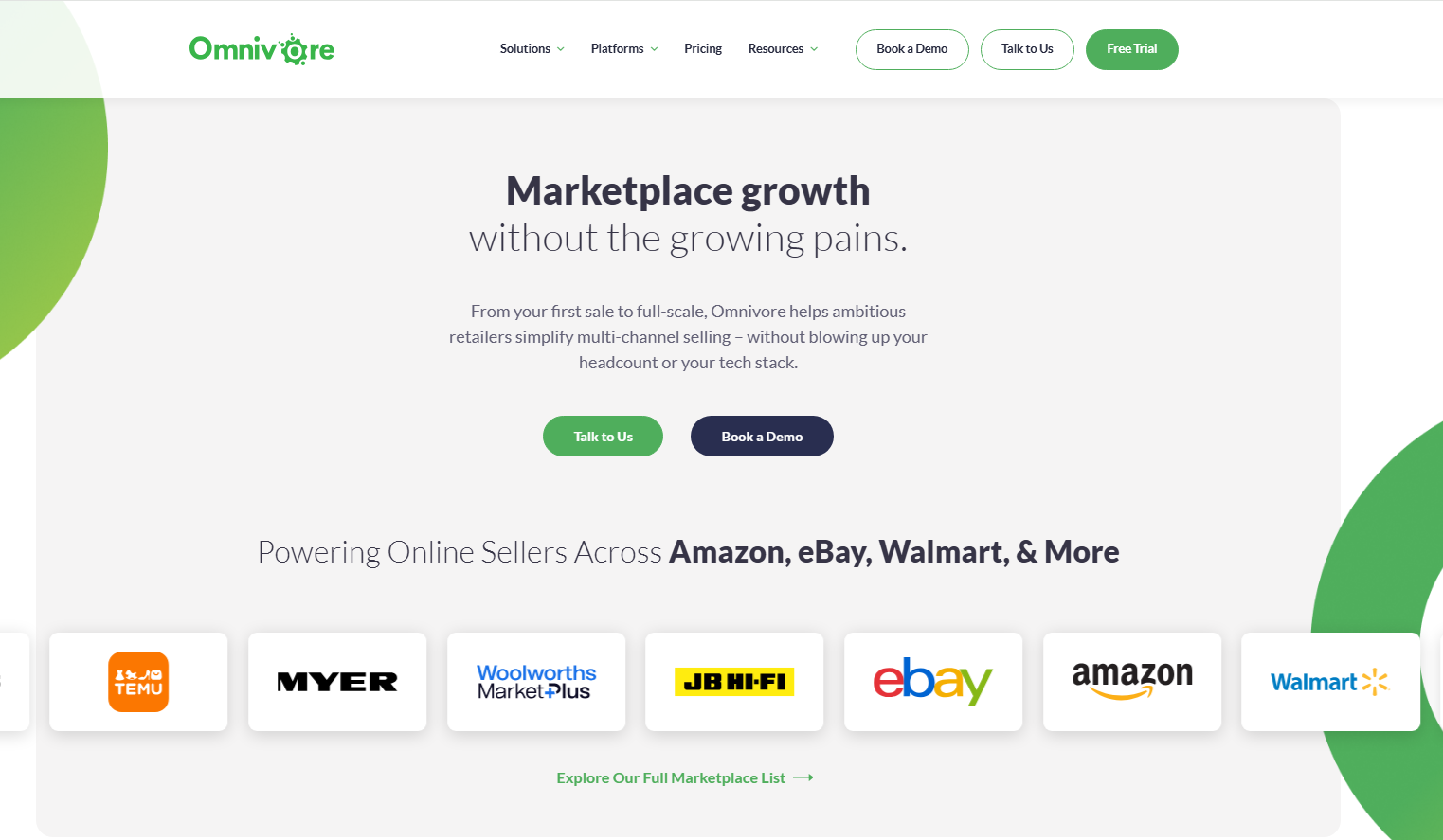
Omnivore is a marketplace integration platform built specifically for Australian and New Zealand retailers. A 12-year ANZ specialist, it connects ecommerce platforms like Shopify, BigCommerce and Magento (Adobe Commerce) with marketplaces including eBay, Amazon, Woolworths MarketPlus, The Iconic, Myer, David Jones, Catch, Kogan, Temu and Trade Me.
It goes well beyond simply getting products listed. From one central platform, Omnivore handles marketplace-ready product data, real-time inventory synchronisation, order management, pricing rules, category mapping, and image and content optimisation for greater visibility, cutting down manual work while improving how your listings actually perform.
That makes it a strong fit for SMB and enterprise retailers wanting to expand beyond their own webstore without building and maintaining custom integrations, and for established marketplace sellers after more control and a scalable way to manage multiple sales channels.
What sets Omnivore apart is its local knowledge. The team understands ANZ marketplace onboarding requirements and compliance quirks in a way that globally focused tools often don't, and local support matters when a marketplace suspends your listings at 9am Sydney time. It's used by over 2,500 retailers in the region, including some of Australia's biggest retail names.
Pricing starts at USD $74.95/month with a 30-day free trial.
Sellbrite

Sellbrite allows e-commerce brands and retailers to easily list and sell items through various online distribution outlets while maintaining centralised inventory and order fulfilment control. Now part of GoDaddy, it remains one of the most accessible listing tools on this list, and one of the few with a genuinely useful free plan.
Sellbrite's cloud-based channel management software integrates with the popular marketplaces and shopping carts you'd expect, including Amazon, eBay, Walmart, Etsy, Shopify, BigCommerce and WooCommerce.
Once you've set up Templates & Recipes, which let you automate listing products from your catalogue and bulk-update data across multiple marketplaces, listing from Sellbrite is relatively simple. Inventory syncs automatically across all your channels, which goes a long way toward preventing overselling.
Pricing is where Sellbrite really stands out for smaller sellers. There's a Forever Free plan covering up to 30 orders a month, with paid plans starting at $29/month billed annually. A 14-day free trial of the full feature set is included, no credit card required.
SellerActive
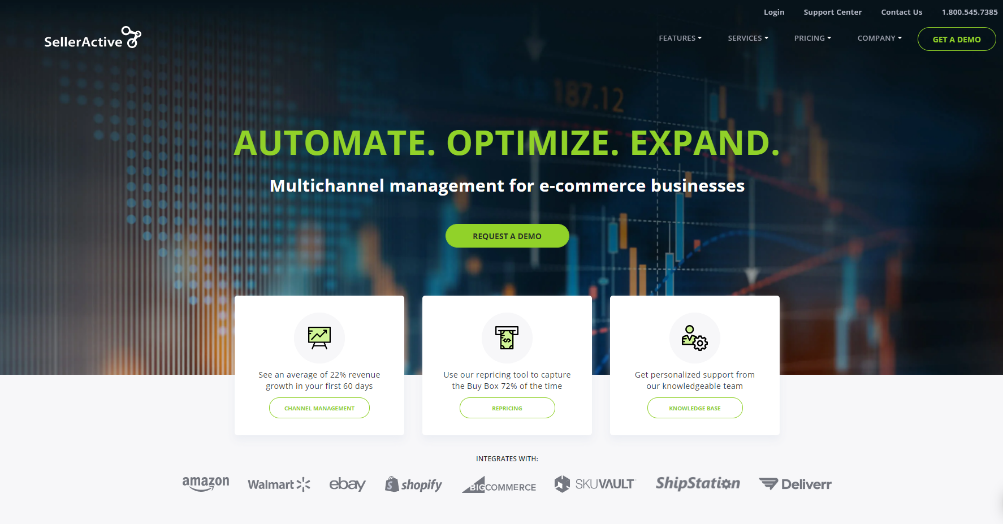
SellerActive has been around since 2011 and was acquired by Cart.com in early 2022, though it still operates under its own name as part of Cart.com's broader commerce software suite. Its focus hasn't changed much, with repricing tools, marketplace inventory synchronisation, and order management all built in. The platform integrates with major marketplaces such as Amazon, Walmart and eBay to provide a single dashboard for listing creation, listing imports, and channel management.
What still sets SellerActive apart from other marketplace tools is the one-on-one assistance from its customer service team, who guide you through the platform from the ground up. That makes it a solid pick for sellers who are scaling up and want real humans on the other end of the line.
Pricing has moved around since the acquisition and is now quote-based, so you'll need to talk to their sales team for current numbers. There's no free trial.
eDesk & Repricer (formerly xSellco)
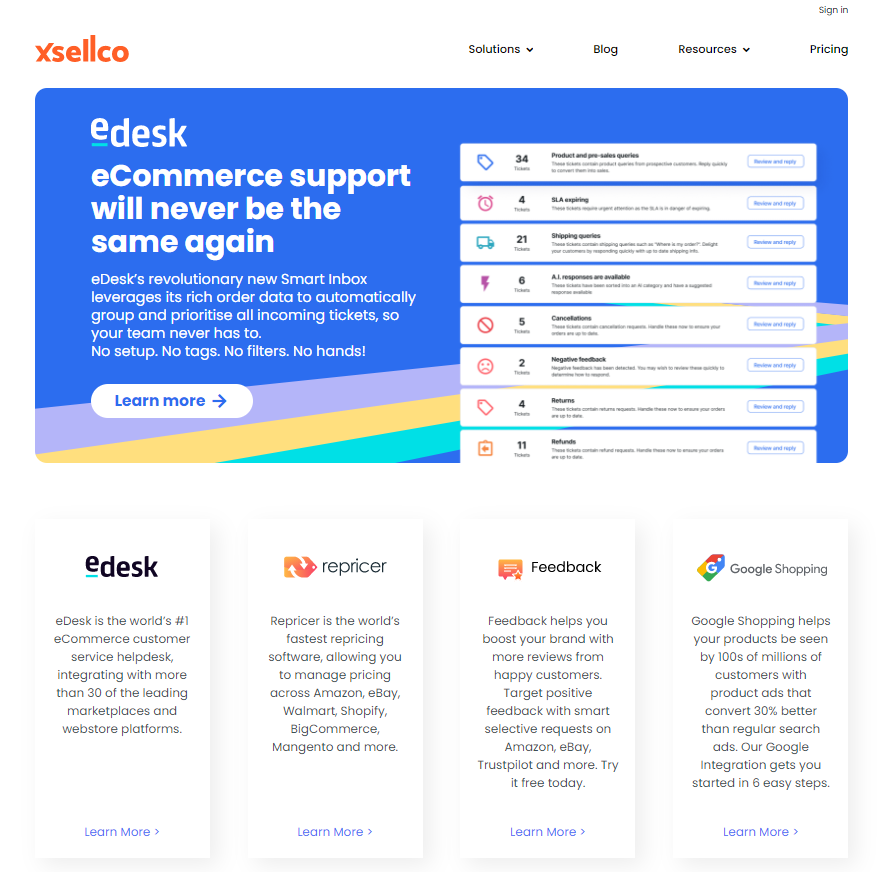
Feedback is a crucial component of online retailing, which is why any serious seller needs a handle on reviews and customer service. This is the entry that used to be called xSellco. The company has since split its modules into two standalone products. eDesk is an e-commerce helpdesk, and Repricer does what the name says.
eDesk pulls customer enquiries from Amazon, eBay, Walmart and your other channels into a single inbox you can learn to use in minutes, with AI-assisted responses now baked in. It also handles review and feedback collection by sending automated, well-timed feedback requests to customers, which means more positive reviews, better seller metrics, and ultimately faster sales growth.
Repricer monitors competitor prices and adjusts yours automatically based on rules you set.
Each product has its own pricing. eDesk starts at $39 per agent per month billed annually, and Repricer plans start at around $199/month. Both offer a 14-day free trial with no credit card required.
Rithum (formerly ChannelAdvisor)
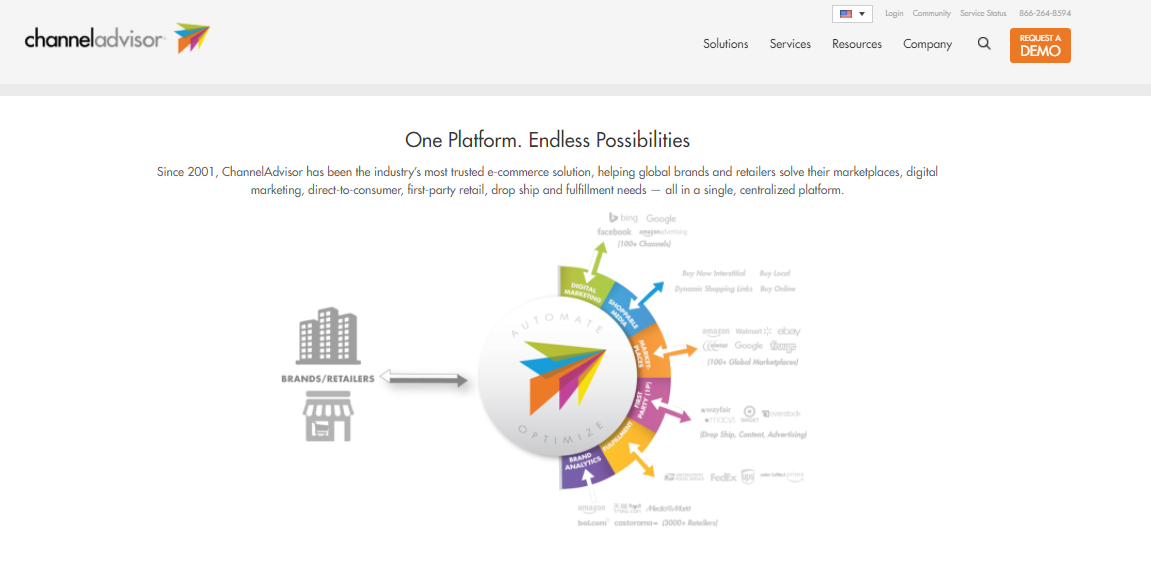
If you knew this one as ChannelAdvisor, here's what happened. ChannelAdvisor merged with CommerceHub in 2022, and the combined company rebranded as Rithum at the end of 2023. It's now one of the largest enterprise commerce platforms going, connecting brands to 420+ marketplaces and retail sites worldwide.
The pitch is the same as it always was, just bigger. It's a one-stop shop for managing inventory levels, product listings, marketplace advertising, pricing rules and fulfilment, aimed squarely at medium-to-large businesses. Dashboards and cross-channel reporting support decision-making, and automated repricing adjusts product prices according to user-defined rules.
Rithum doesn't reveal pricing publicly. You'll need to contact them for a custom quote, and word on the street is that it still sits firmly at the premium end. If you're an enterprise brand running serious volume across many channels, it's built for you. If you're not, there are lighter options on this list.
Zentail
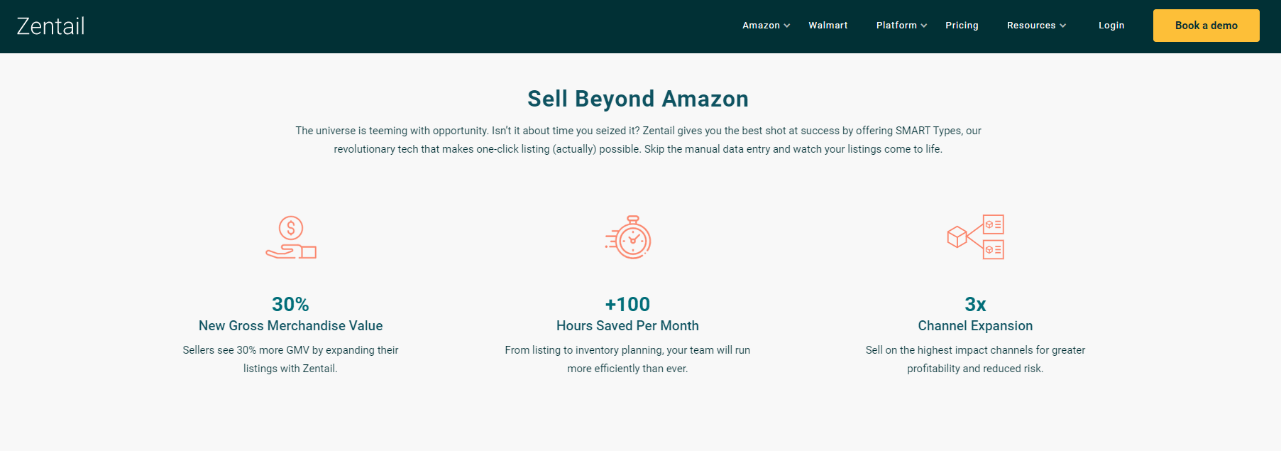
Designed by retailers for retailers, Zentail has all the features to run and automate multi-channel e-commerce sales, supporting major channels such as Amazon, Walmart, Target Plus and eBay.
As one of the more sophisticated yet easy-to-use automation tools available, Zentail uses its SMART Types technology to centrally manage product information, inventory, orders and vendors in one platform. List a product once and Zentail handles the category mapping and field translation for each marketplace, which is the part of multichannel selling that usually eats your week. With solid multichannel analytics on top, it helps you make better, quicker decisions.
Zentail is best suited to mid-market e-commerce businesses looking to simplify existing operations rather than set up their first channel. Pricing is quote-based and scales with usage. Expect somewhere around the $1,000/month mark for multichannel operations, which puts it out of casual-seller territory.
StoreAutomator

StoreAutomator is a multichannel listing and inventory management software designed for brands and sellers who want to get the best out of each marketplace they sell on, especially those with complex catalogues that simpler tools choke on.
Catalogue management, channel management, data synchronisation, inventory management and order management are all in the box, with integrations across 300+ channels including Amazon, Walmart, eBay, Shopify and Etsy. Its real strength is the data mapping and templating engine. If your product data needs heavy transformation to fit each marketplace's requirements, this is one of the few mid-market tools that handles it gracefully.
There's also a built-in repricer that checks market conditions automatically and can either recommend or adjust your product pricing based on rules and parameters you define.
Pricing is custom, built around your catalogue and channel count, with no long-term contracts and notably no revenue share or commissions, which the spreadsheet-keepers among you will appreciate. You'll need to book a demo for a quote.
CedCommerce
If you're struggling to expand your online store to other platforms or marketplaces, CedCommerce is here to make the transition easier. The company has built integrations for over 160 marketplaces, helping everyone from first-time online sellers to established brands move product data across channels and keep it in sync.
Their plugin-based multichannel solutions let sellers move data sets or bulk-import listings, and help retailers avoid overselling by accepting orders automatically and synchronising inventory counts across multiple marketplaces. If you run on Shopify, WooCommerce, Magento or BigCommerce, there's almost certainly a CedCommerce app for the marketplace you're eyeing.
The pricing model is per-integration rather than all-you-can-eat. Individual marketplace apps typically run somewhere between $20 and $50 a month, with 7-day free trials common and bundle pricing available if you're connecting several channels. That makes CedCommerce one of the most affordable ways on this list to test a new marketplace before going all-in.
Fishbowl Channels (formerly Sellware)
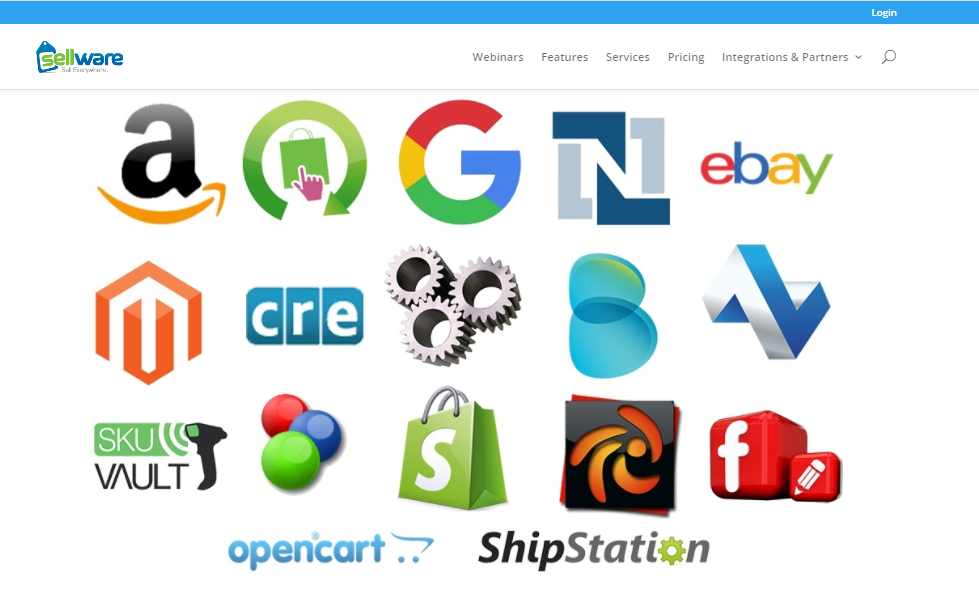
There's been a name change here too. Sellware is now Fishbowl Channels, having been folded into Fishbowl's inventory management suite. The multichannel listing and order management capability is still there, covering Amazon, eBay, Shopify, Magento and others, but it now lives alongside Fishbowl's warehouse and manufacturing inventory software.
The platform links your sales channels and automatically lists products on connected marketplaces based on rules you define, keeps a close eye on stock levels, and updates your webstore and marketplaces in real time. Orders from all your connected channels are consolidated in one place, with key metrics such as sales, shipments, top sellers and slow movers all viewable at a glance.
The change in ownership changes who this is for. If you only need listing management, there are lighter options above. But if you're a seller who also needs proper warehouse or manufacturing inventory control, getting both from one vendor is genuinely convenient. Pricing is via demo and quote.
GeekSeller
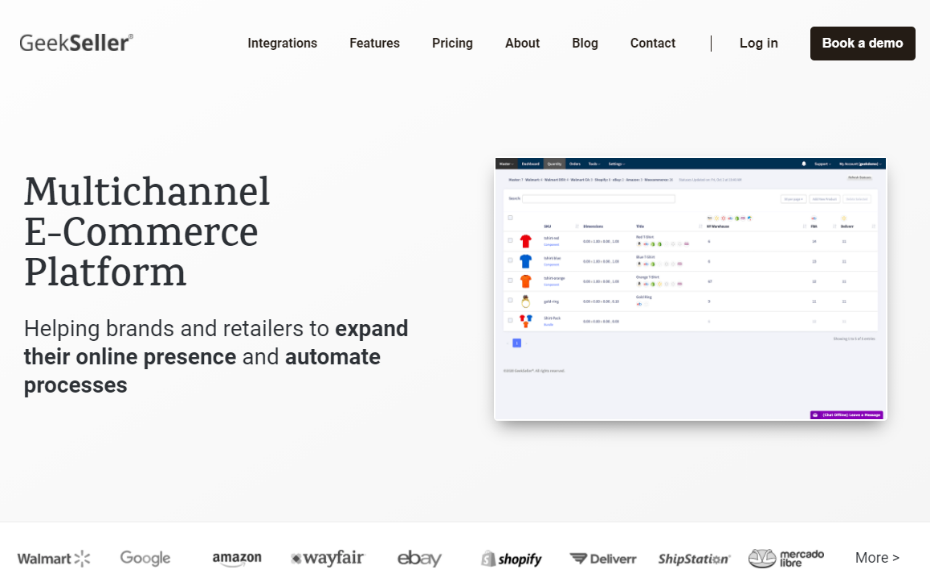
GeekSeller started life as a Jet.com automation tool, and when Jet shut down, it made a smart pivot. It's now one of the strongest Walmart Marketplace specialists around, with official Walmart solution provider status and support for Walmart's US, Canada and Mexico marketplaces, plus Amazon, eBay, Shopify and a range of shipping and 3PL solutions.
Multichannel inventory synchronisation, real-time inventory alerts, repricing and order fulfilment software are all available, alongside a data-focused analytics dashboard and order management from a single screen. If Walmart is a meaningful part of your strategy, GeekSeller's depth there, and its reputation for responsive support, is hard to beat.
Its cross-platform listing migration tools remain fairly simple, though, so expect to do some per-marketplace listing work yourself.
Pricing is more approachable than it used to be, with most multi-marketplace sellers paying around $199/month for unlimited products and orders, month to month, no setup fee.
What's the best e-commerce marketplace tool to use?
Finding ways to automate parts of your e-commerce business helps you expand without losing income, and the marketplace management software above is one of the most effective ways to do it. The right pick comes down to your size, your channels, and how much of the work you want the tool to take off your plate.
And once you're live on multiple channels, the next opportunity is performance. The sellers who win are the ones who can see how every marketplace is tracking, in one view, and know where to focus.
That's where MerchantSpring comes in. Whether you're a professional marketplace seller, an enterprise brand or an agency, MerchantSpring gives you a single analytics dashboard across Amazon, Walmart, eBay, Shopify and 120+ marketplaces, covering sales, advertising, profitability and operational metrics in one place, with no limit on the number of channels you connect. It sits neatly alongside any of the management tools above. Powerful, right? Book a demo or explore our supported channels.




The data layer under marketplace reporting
MerchantSpring normalises sales, advertising, profitability and operational data across 120+ channels into one layer.

One data layer across every channel you sell on
Every marketplace reports sales, fees and payouts in its own shape. MerchantSpring normalises all of it into one data layer you reach through dashboards, the API, or your own AI tools. The walkthrough takes 15 minutes on a live demo account.


