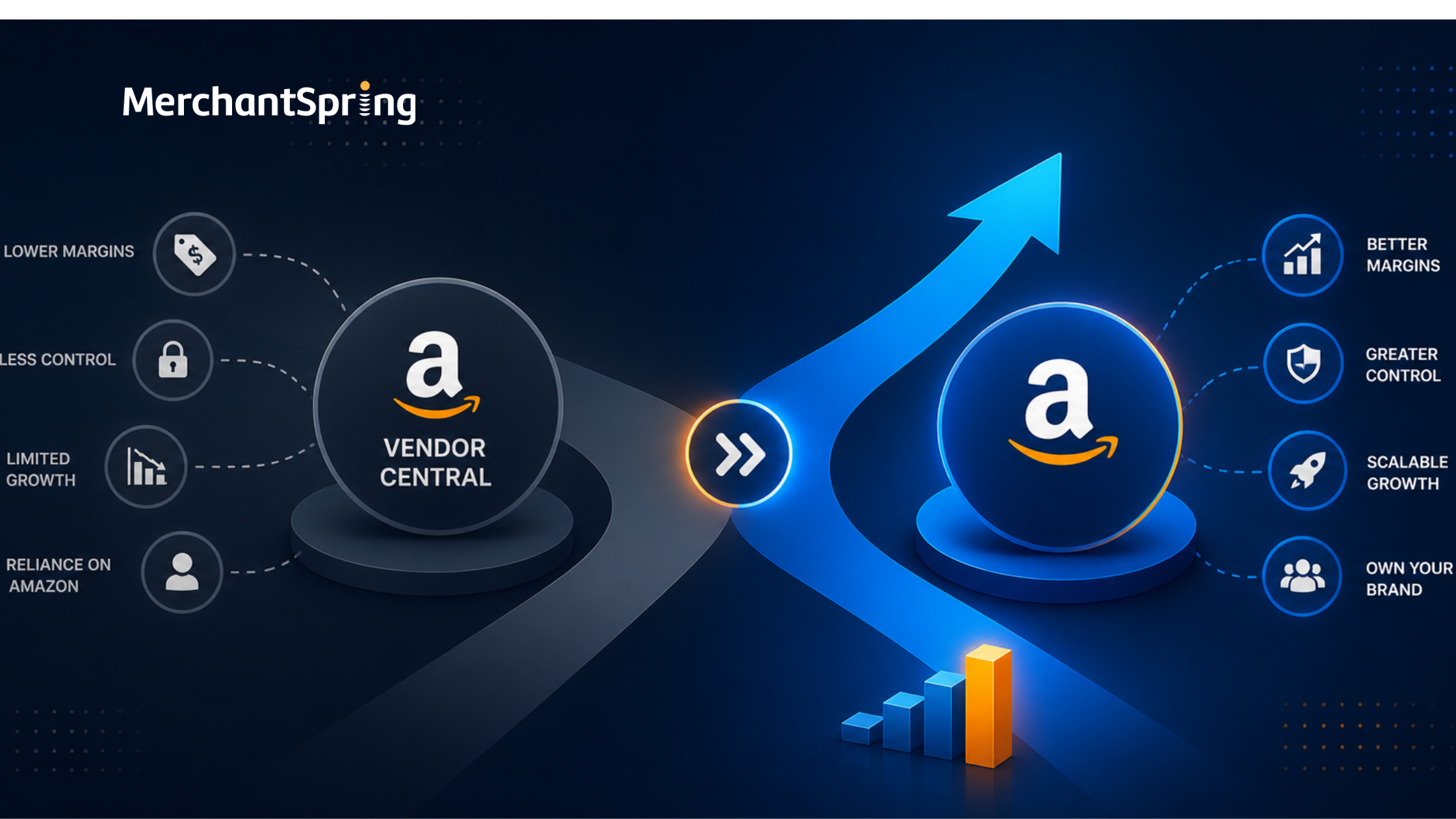
For years, Amazon Vendor Central was viewed as the more established path for brands that wanted scale, visibility, and a direct wholesale relationship with Amazon. But that model has become harder to justify for many ecommerce teams. Rising fees, limited support, less pricing control, and slower reporting have pushed more brands to consider Seller Central as a more flexible long-term option.
This shift is not only about changing account types. It is about regaining control over profitability, product launches, promotions, inventory, and brand presentation.
For years, Amazon Vendor Central was viewed as the more established path for brands that wanted scale, visibility, and a direct wholesale relationship with Amazon. But that model has become harder to justify for many ecommerce teams. Rising fees, limited support, less pricing control, and slower reporting have pushed more brands to consider Seller Central as a more flexible long-term option.
This shift is not only about changing account types. It is about regaining control over profitability, product launches, promotions, inventory, and brand presentation, often with the support of a full-service Amazon agency like BeBOLD Digital to guide the transition and optimize performance.
1. Vendor Central Offers Less Control Than It Once Did
Vendor Central can still work for certain large brands, but many smaller and mid-sized companies now face a more restrictive experience. Amazon controls purchase orders, retail pricing, and many operational decisions, while brands often have limited visibility into performance or margin impact.
Support has also become harder to access. Some brands may need Amazon Vendor Services for stronger assistance, but that added cost can make the economics even more difficult. When support is slow and decision-making remains largely in Amazon’s hands, Vendor Central can feel less like a partnership and more like a fixed wholesale channel.
2. Seller Central Gives Brands More Financial Flexibility
One of the biggest reasons brands move to Seller Central is the ability to manage costs more actively. Vendor Central typically locks brands into wholesale pricing, co-op fees, allowances, chargebacks, and other deductions that can reduce profitability before the brand has much room to respond.
Seller Central still comes with fees, including referral fees, fulfillment costs, storage, advertising, and returns. The difference is that many of these costs are more visible and easier to adjust. Brands can evaluate SKU-level profitability, control pricing, decide when to discount, and shift ad spend based on performance.
For teams trying to scale without sacrificing margins, that flexibility can be a major advantage.
3. Promotions Work Better When Brands Control the Strategy
High-traffic shopping events like Prime Day and Black Friday can drive volume, but they are not automatically profitable. Vendor Central brands may face pressure to participate in promotions with aggressive discounts, even when those discounts damage margins.
Seller Central gives brands more choice. They can decide:
- Which SKUs should be promoted
- How deep the discount should be
- When the promotion should run
- How paid media should support the event
This allows brands to pair deals with Sponsored Ads, DSP, storefront updates, or outside traffic campaigns in a more intentional way.
4. Better Data Makes Faster Decisions Possible
Seller Central also gives brands stronger access to real-time performance insights. Instead of waiting on limited reports or reacting to Amazon-controlled purchase orders, teams can track sales, keyword performance, conversion trends, returns, fees, and advertising outcomes more directly.
That transparency matters in fast-moving categories such as beauty, pet, wellness, and home goods. When trends shift quickly, brands need to update pricing, launch products, adjust content, and replenish inventory without waiting for multiple layers of approval.
Tools like beBOLD’s analytics platform can also help brands turn Seller Central data into clearer SKU-level profit and growth decisions.
5. A Vendor-to-Seller Move Requires Planning
Moving from 1P to 3P should not be rushed. Brands need to review SKU economics, existing Vendor inventory, FBA readiness, listing control, ad continuity, and possible Buy Box conflicts before making changes.
A safer approach is usually phased. Start with a smaller group of SKUs, validate profitability, monitor operational issues, then expand once the new model is stable. This reduces disruption while helping the brand understand how Seller Central economics perform in practice.
Seller Central is not automatically the right answer for every brand. But for companies that want more control over pricing, data, inventory, promotions, and creative assets, it can offer a stronger foundation for profitable Amazon growth.
This article highlights key ideas from beBOLD Digital’s original guide.
For the complete breakdown and detailed strategies, read the full article here: The Great Amazon Shift: Why More Brands Are Moving from Vendor Central to Seller Central